Why the capital was built in the middle of nowhere
Jean de Béthencourt founded Betancuria in 1404, and the choice of site was pure defence. Corsairs raided the Canarian coasts for centuries, so the Normans put their capital in a valley several kilometres inland, screened by mountains and invisible from the sea. It worked for a while, and then it did not: raiders reached the town in 1593 and destroyed the church. Betancuria remained the island's capital until 1834, when the seat moved to Antigua and the village quietly emptied.
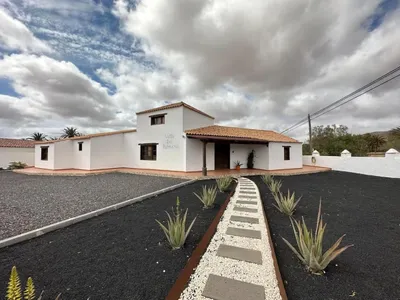
What survived is a small, extremely well-kept place of whitewashed walls, dark stone and palm trees, protected as a heritage site since 1979. Fewer than a thousand people live in the whole municipality, the smallest population in the Canaries, so most of the daytime crowd is visitors. Betancuria turns up regularly on lists of Spain's prettiest villages, and unlike many places carrying that label it earns it without effort — there is no manufactured old town here, just what was left standing.