A Striking Contrast
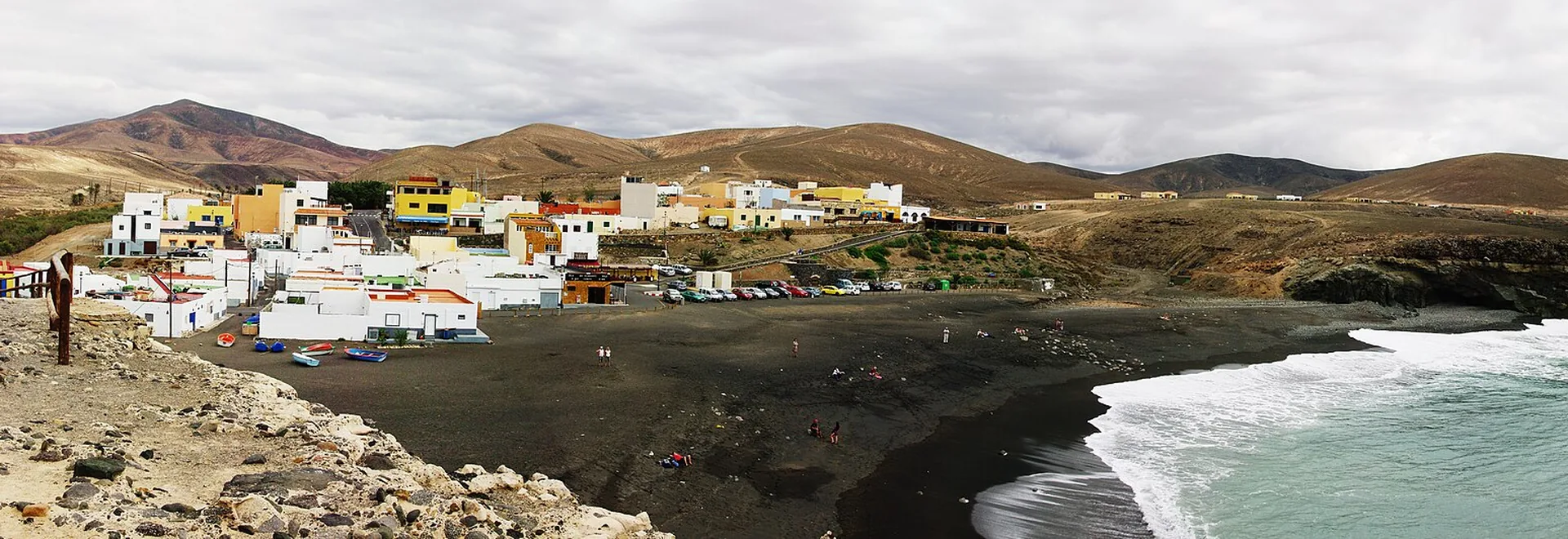
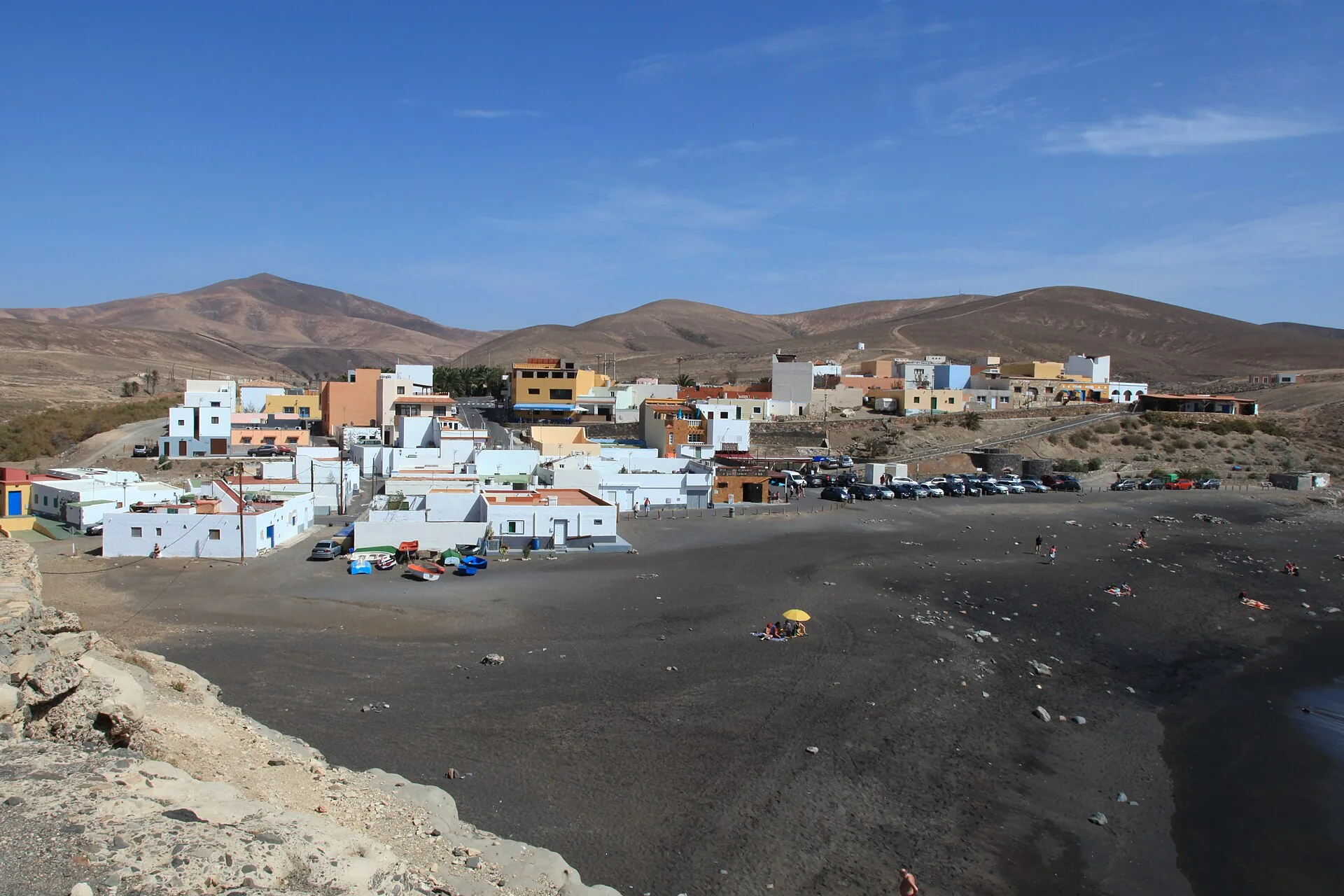
Playa de Ajuy is a short, curved bay of black volcanic sand fronting a small fishing village that shares its name, on Fuerteventura's west coast in Pájara municipality. Gone are the pale, wind-sculpted dunes synonymous with Corralejo or Sotavento; here, the sand is dark and fine underfoot, framed by steep cliffs rather than sprawling resort developments.
The village itself is a tiny hamlet: a cluster of houses, a handful of restaurants overlooking the bay, and a car park at the northern end of the beach. You'll find no promenade, no sunbed rentals, no ubiquitous beach bar chains — just fishing boats resting on the sand, facing the raw Atlantic expanse.
Visitors aren't drawn solely by the beach, but by the captivating surroundings. The dramatic cliffs at the northern end shelter the Caleta Negra caves, carved into rock frequently cited – even by Fuerteventura's own tourist board – as among the oldest exposed in the Canary Islands. A fossilised dune and ancient lime kilns dot the coastal path, silent testaments to this stretch of coast's role in shaping the island over tens of millions of years.


