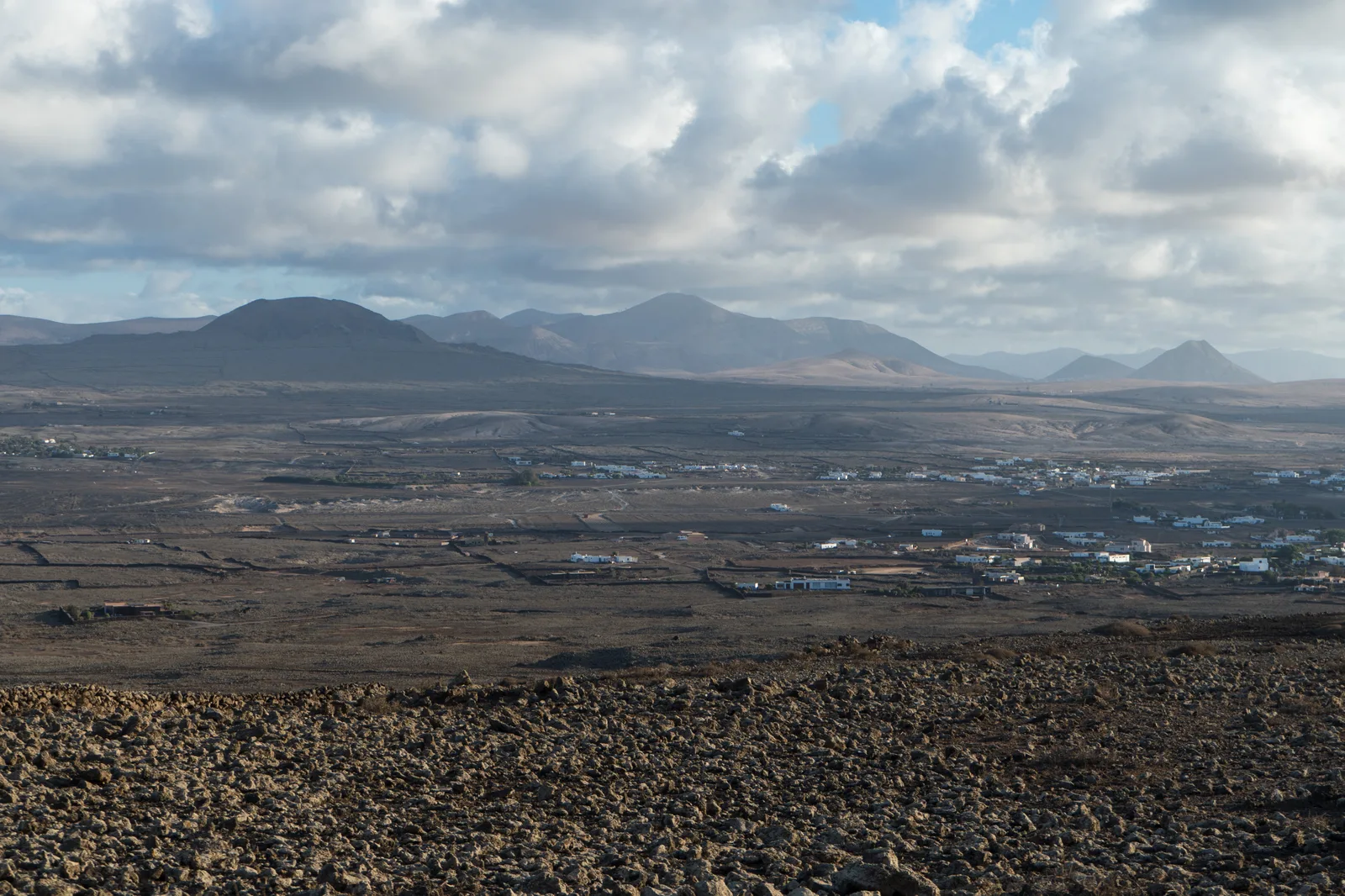
Aerial view of Lajares village scattered across Fuerteventura's volcanic plain, with the cones of Calderón Hondo and Montaña Colorada on the horizon

Photo: Alexey Komarov (CC BY-SA 4.0), via Wikimedia Commons

Lajares, Fuerteventura

Holiday rentals in Lajares

An inland surf village within fifteen minutes of three coasts

Lajares sits inland in the north of Fuerteventura, a short drive from Corralejo, El Cotillo and the extinct volcano of Calderón Hondo. It has no beach of its own, which is exactly why surfers and kitesurfers base themselves here — the north shore, the west coast and Corralejo's dunes are all fifteen minutes away or less. Two preserved gofio windmills, a long-standing lace and embroidery tradition and a busy Saturday craft market give it a slower, more local character than the resorts on the coast.

What Lajares is actually like
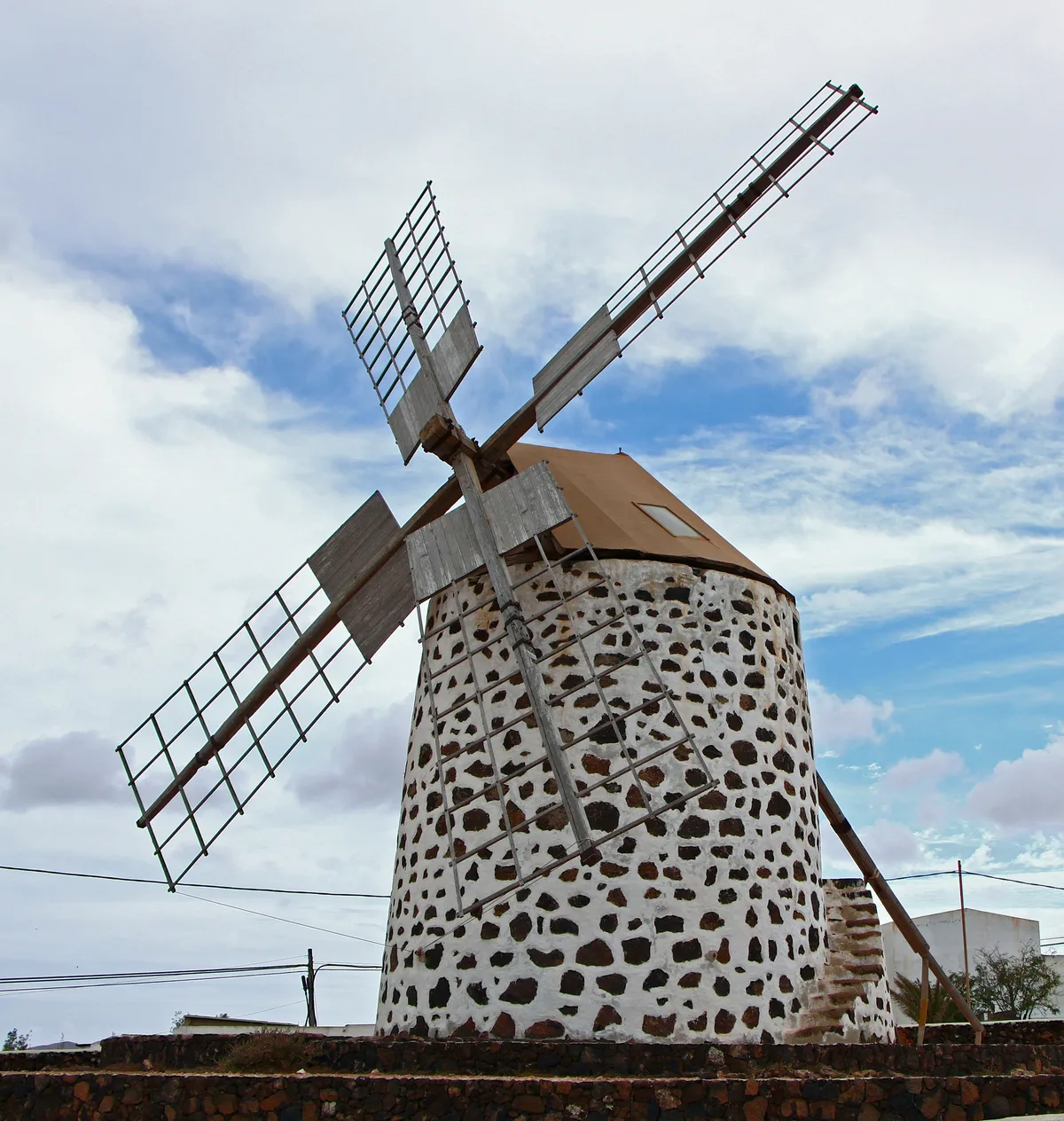
Traditional stone gofio windmill (molino) in Lajares, its wooden sails outlined against the sky
One of Lajares' two preserved 19th-century gofio windmills · Photo: H. Zell (CC BY-SA 3.0), Wikimedia Commons

Lajares is a small inland village a few kilometres south of Corralejo and east of El Cotillo, with no coastline of its own. That's the whole appeal for a lot of visitors: it sits roughly equidistant from the north shore, the west coast surf breaks and Corralejo's dunes, so you can wake up, check the wind and swell forecast, and drive to whichever coast is actually working that morning.

The village itself is low-rise and unhurried — a scatter of whitewashed houses across a flat volcanic plain, ringed by the dark cones of old volcanoes including Calderón Hondo. It has grown into something of a surf-town hub over the last couple of decades, with surf shops, board rental, cafés and a handful of surf camps, but it hasn't lost its working village core: goats still graze the roadside plots, and the church square still functions as the actual centre of town rather than a tourist backdrop.

Compared with Corralejo or Costa Calma, Lajares is quiet after dark and has almost nothing in the way of nightlife. What it has instead is a strong sense of community among the surfers, cyclists and long-term residents who base themselves here, and easy access to some of the best volcanic scenery on the island.

Windmills, embroidery and the Saturday market

Lajares' two stone windmills, once used to grind gofio (the toasted grain flour that's a staple of Canarian cooking), still stand at the edge of the village and are among the best-preserved on the island, even though neither grinds anything today.

The village is also known island-wide for calados — a fine, hand-cut openwork embroidery brought to the Canaries generations ago and still practised by local needleworkers. You'll see examples for sale in the small craft shops around the plaza, alongside local cheese, honey and jam.

All of this comes together every Saturday morning, when the village square fills with a craft and farm market — needlework, ceramics, local produce and street food, busier in winter than in the height of summer. It's a genuinely local market rather than a tourist stall setup, and worth timing a visit around if you're in the area.

Getting to the coast and Calderón Hondo

Because Lajares has no beach, most visitors treat it as a base rather than a destination in itself. El Cotillo's lagoons and surf breaks are about eight kilometres west, a ten-minute drive; Corralejo's dunes and Flag Beach are a similar distance northeast. Both are close enough to visit more than once without feeling like an expedition.

The other reason people base themselves here is Calderón Hondo, an extinct volcano on the edge of the village with a well-preserved crater you can walk almost all the way around. It's an easy, short hike by island standards, and one of the more rewarding things to do on this part of the island without a car.

Several surf schools run lessons from Lajares and shuttle students to whichever beach has the right conditions — a useful option if you don't want to guess which coast to drive to yourself.

Where to stay in Lajares: holiday rentals

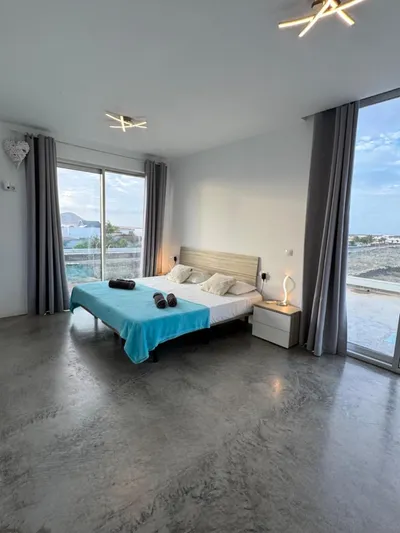
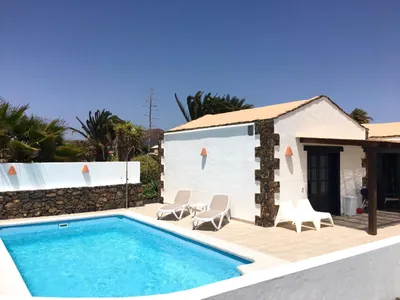
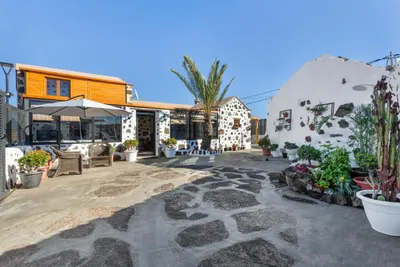
Lajares is a village rather than a resort, so there is no single strip to stay on. It has no beach of its own; what you are choosing is a quiet base fifteen minutes or less from the north shore, El Cotillo and Corralejo's dunes. That makes most sense if you surf or kitesurf, want to walk up Calderón Hondo from the edge of the village, or simply prefer a slower, more local pace.

Listings on StayInFuerte are offered directly by their owners. You send an inquiry and agree dates and price with them, with no booking fees, and nothing is confirmed instantly, so include your dates and group size in your first message.

Where is Lajares?

Frequently asked questions

No — Lajares is an inland village with no coastline of its own. Its main appeal is location: it sits close to the beaches of both Corralejo and El Cotillo, plus the Calderón Hondo volcano, so it works well as a central, quieter base if you're happy to drive or cycle a short way to the sand.

Around 10 km to Corralejo and 8 km to El Cotillo, both roughly a 10 to 15 minute drive — close enough that many visitors base themselves in Lajares and use it as a hub for both coasts.

Yes, indirectly — the village itself has no surf, but several surf schools are based here and take beginners to whichever nearby beach has the gentlest conditions that day. It's a popular choice for surf camps precisely because it isn't tied to one coast.

Yes. The trailhead is on the edge of the village and the walk to the crater rim and back is short by local standards — well under two hours for most people, with a defined path and no technical climbing. See our Calderón Hondo guide for the full route.

There's more than you'd expect for a village this size — two preserved windmills, a strong tradition of hand embroidery, a scatter of good surf-town cafés, and a genuinely local Saturday craft and produce market. It's a pleasant place to spend a slow morning even without driving anywhere.

Yes — Lajares is a quiet inland village with very little crime and feels safe to walk around at any time. There's no beach here to worry about; the main safety notes are for the surf breaks at nearby El Cotillo and Corralejo that Lajares' surf schools use, where currents and reef conditions vary by beach and by day.