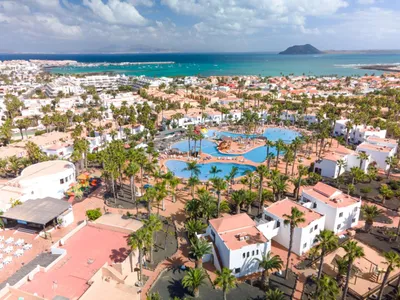
An expansive golden beach at Grandes Playas Corralejo, backed by rolling dunes, with a Riu hotel visible in the distance.

Photo: Thomas Tolkien (CC BY), via Wikimedia Commons

Corralejo, Fuerteventura

Grandes Playas

This 3.5km expanse of stunning beaches lies within Corralejo's protected dune park

Grandes Playas is the collective name for a magnificent 3.5km stretch of interconnected beaches – Los Matos, Playa Larga, El Viejo, El Pozo, and El Caserón – bordering Corralejo's spectacular dune natural park. Two large resort hotels anchor the southern end; venture just a few hundred metres beyond them, and the crowds quickly dissipate, giving way to the vast, empty dune coast further along.

Defining Grandes Playas
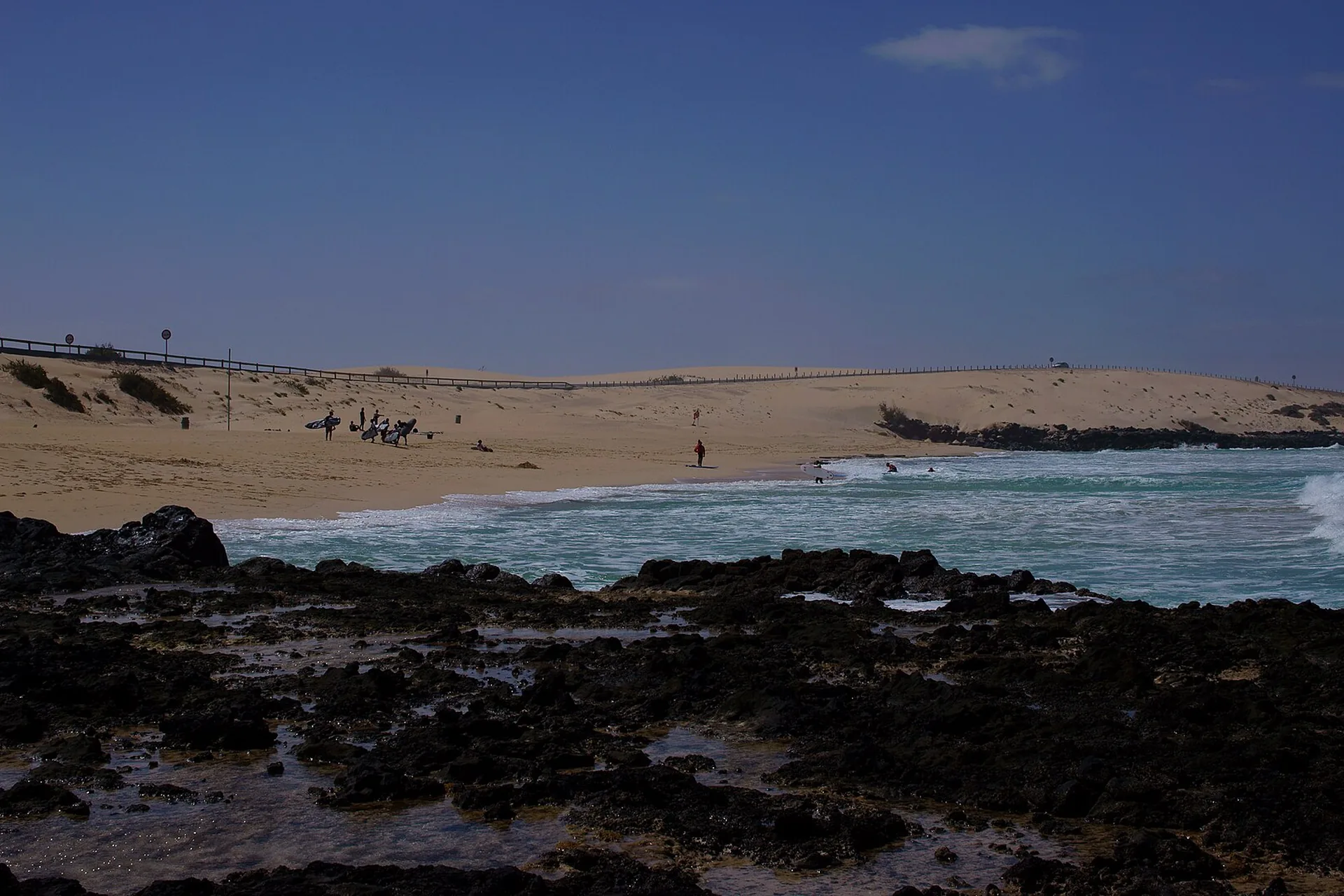
Wide golden beach at Grandes Playas Corralejo with dunes behind and a Riu hotel visible in the distance
A 3.5km cluster of beaches inside Corralejo's protected dune park · Photo: Jarek Prokop (CC BY 3.0), Wikimedia Commons

"Grandes Playas" serves as the collective term for a series of adjoining beaches—Los Matos, Playa Larga, El Viejo, El Pozo, and El Caserón—all nestled within the Parque Natural de Corralejo. While names like Playa del Moro, Playa Alzada, and simply "Dunas de Corralejo" are also used for parts of this same coastline, the exact boundaries often blur; it's effectively one continuous, sprawling beach with multiple designations.

Most sources agree on a length of 3.5km, stretching from near the Riu hotels at the edge of town towards Playa de la Barreta. While larger figures (nine, even eleven kilometres) occasionally appear, these almost certainly refer to the entire 10km natural park coastline, rather than this specific named stretch of sand.

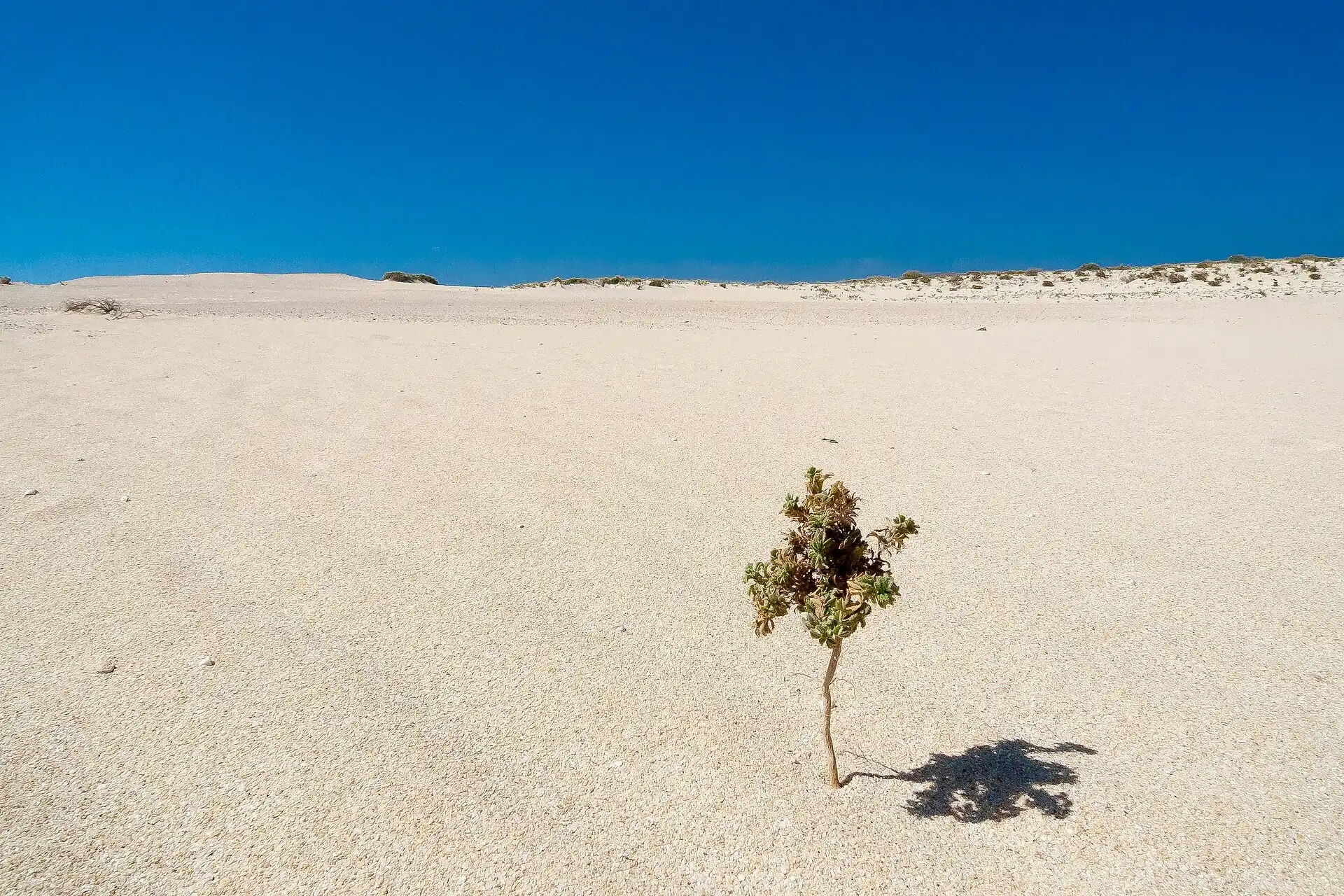
The sand itself is pale and exquisitely fine, continually feeding the vast dune field that gives the park its name. Venture just a couple of hundred metres past the initial ridge, and the landscape transforms into a true desert environment: rolling low dunes, sparse, resilient plants, and an almost palpable silence. Further south along this protected coast lies Flag Beach, Corralejo's renowned spot for kite and windsurfing.

Hotels, Wind Conditions, and Appeal

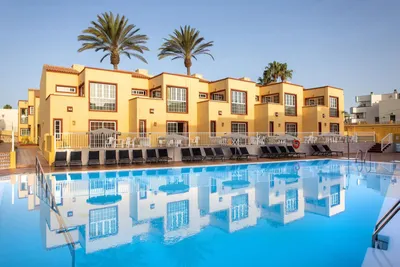
Two prominent hotels—Riu Oliva Beach Resort and Riu Palace Tres Islas—are uniquely situated directly on the sand at the town end. These structures predate the park's protection, having been built in the 1970s. Their beach permits have been the subject of long-standing legal disputes in Spanish courts, including orders concerning unauthorised extensions. While this history doesn't impact visitor experience, it explains why their presence within a protected natural park often raises local eyebrows.

This entire stretch experiences the same north-easterly trade winds as Flag Beach further south, typically strengthening after midday and reaching their peak intensity from May to September. Playa del Moro, adjacent to the Riu hotels, offers sufficient wind for beginner windsurfing and kitesurfing on summer afternoons, while Playa Alzada caters to windsurfing on breezier days. Mornings are generally calmer across all sections, making them ideal for swimming.

For comprehensive facilities, the area near the Riu hotels provides sunbeds, showers, a beach bar on Playa el Viejo, and lifeguard services for much of the year. Venture further along the coast, and the crowds quickly dissipate; the quieter, more remote sections attract naturists and those simply seeking pristine, empty sand. There's no distinct boundary between these groups, just a gradual thinning of people the further one explores.

Practical Information: Access, Parking, and Safety

The FV-1 highway extends south from Corralejo town, running parallel to this entire coastline. Numerous well-marked turn-offs provide access to parking areas near Playa el Viejo, Playa del Moro, and Playa Alzada. The Riu hotels area is approximately 4km from Corralejo harbour – an easy 10-minute drive, an 8-euro taxi fare, or a pleasant, flat 45-minute walk along the coastal path for those who enjoy the distance. A local bus service also connects the town centre to this route.

Swimming conditions vary considerably between sections. Some sheltered pockets near the hotels offer a gentle, gradual entry ideal for children, while other stretches, such as Playa Alzada, can experience stronger currents. Lifeguards patrol the main sections for much of the year, displaying warning flags; always consult these flags before entering the water, rather than relying solely on visual assessment. Sea temperatures average around 18-19°C in winter, rising to 21-23°C by late summer.

As this is a protected natural park, not a typical resort beach, visitors are kindly asked to keep to marked paths and designated parking areas. Driving or camping on the dunes is strictly prohibited, and all litter, including cigarette butts, must be taken home. The park spans approximately 2,600 hectares and also serves as a crucial bird protection area, making its environment far more fragile than it might appear underfoot.

Where is Grandes Playas?

Frequently asked questions