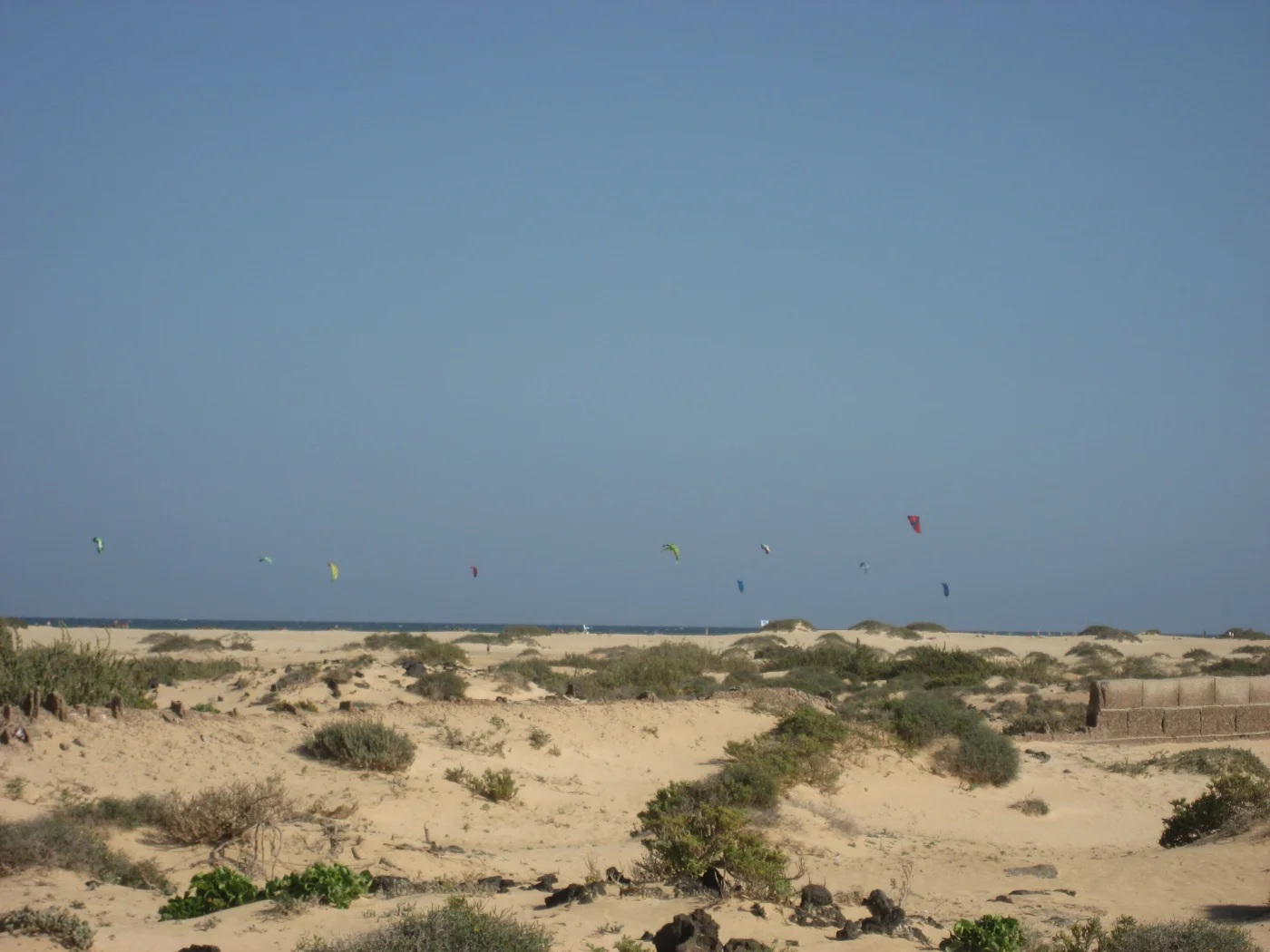
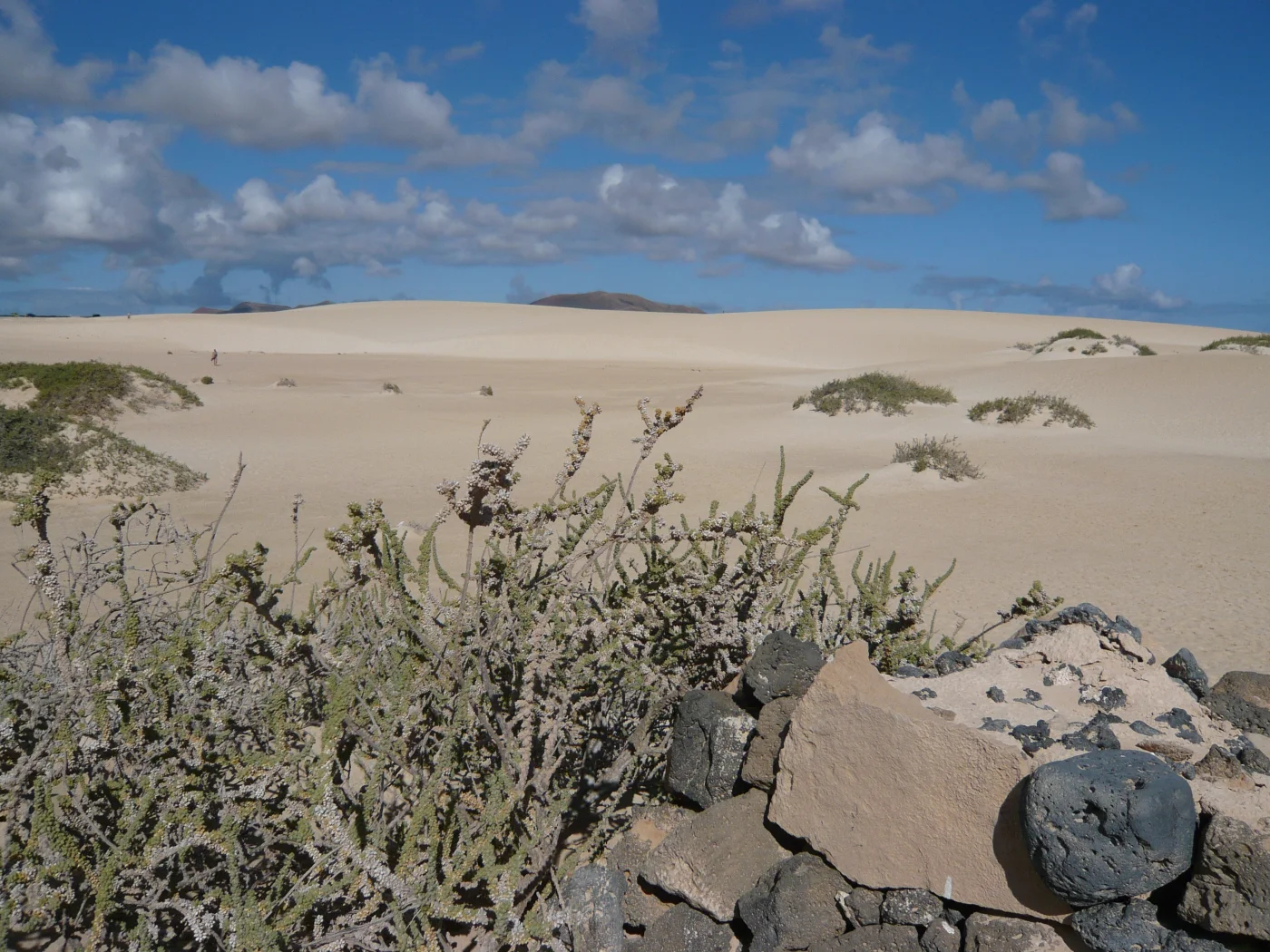
Multiple kitesurfers riding the trade winds at Flag Beach Fuerteventura with the dunes of Corralejo behind
Corralejo, Fuerteventura

Flag Beach

The island's kite and windsurf beach, three kilometres south of Corralejo

Flag Beach is Fuerteventura's best-known wind-sports beach: a stretch of sand inside the Parque Natural de Corralejo, backed by golden dunes and open to the Atlantic. The Canarian trade winds are at their most reliable between June and September, and several accredited schools run lessons and hire out gear directly on the sand, so first-timers and professionals end up sharing the same water.

The beach and its wind
Kitesurfer launching from the shore at Flag Beach with the Atlantic behind
Steady trade winds from May to September make Flag Beach a year-round draw

Flag Beach — Playa de la Bandera locally — is a three-kilometre stretch of soft pale sand inside the Parque Natural de Corralejo, about three to four kilometres south of Corralejo town. Dunes back it, the open Atlantic is in front of it, and from late spring through autumn there are usually dozens of kites in the air above it.

The reputation is earned. The northeast trade winds blow here consistently from May through September, usually reaching Force 4 to Force 6 by the afternoon. The seabed stays shallow for the first hundred metres over forgiving sand, and the beach faces northeast, which gives a mostly side-onshore wind — the direction you want when you are learning to kite.

It is not a beach only for experts, though. Mornings before about 11am are often calm enough to swim and snorkel away from the watersports zone, and the beach is wide enough that anyone not going in the water can lie on a towel out of the worst of the wind.

Schools, hire and days off the water

Several established schools work directly off the sand. The longest-running of them, Flag Beach Windsurf & Kitesurf Centre, has IKO and VDWS certified instructors, equipment hire, taster sessions and multi-day courses. A beginner's half-day is typically 80 to 120 euros, and the per-session rate drops on longer courses.

It is a good place to learn for concrete reasons: a consistent wind direction, a sandy seabed, and a watersports zone kept clear of boats and swimmers. Intermediates progress quickly on the same conditions, and stronger riders come for the consistency and for the company on the water.

There is enough here for a day out of the water too — long walks into the dunes, a quiet morning swim, snorkelling along the rocky fringes. One beach bar, Waikiki, covers lunch and cold drinks. Wear sunscreen and top it up: the wind keeps you cool and hides how hard the sun is working.

Getting there, parking and when to come

Flag Beach is three to four kilometres south of Corralejo on the FV-1. You can drive — roadside parking is free, but it fills up by about 11am in summer — walk the beachfront from Corralejo old town in around 40 minutes, or take a taxi for roughly five euros.

May to August are the windiest months. October through April are calmer and better suited to swimming and family beach days; the sea runs 18-19°C in winter and 21-23°C in late summer.

If you are not here for the wind, come early. It is lightest before 11am, the sand stays put, and the colour of the water at sunrise is the best of the day. By 3pm in summer the wind is usually up and blowing sand hard enough to sting your ankles.

Where is Flag Beach?

Frequently asked questions