The isolated stone house of Villa Winter with its round corner tower below the mountains at Cofete, Fuerteventura

Photo: Norbert Nagel (CC BY-SA 3.0), via Wikimedia Commons

Cofete, Fuerteventura

Villa Winter

An unfinished house at the end of a dirt track, and the legends that grew around it.

Villa Winter stands alone above Cofete on the Jandía peninsula, a stone and concrete house with a round corner tower, built by the German engineer Gustav Winter from the late 1940s. Its isolation has attracted decades of stories about Nazi submarines and tunnels to the sea — none of them supported by evidence. Reaching it means around 20 km of rough dirt track from Morro Jable, and the house is private property with no official visiting arrangement.

Getting there, and what you will actually find

Villa Winter is a by-product of a trip to Cofete rather than a destination in its own right, and it is best approached that way. The road over the ridge from Morro Jable is around 20 kilometres of loose, corrugated dirt, hair-raising in places and slow throughout. Ordinary hire cars do make it in dry weather, but nearly every rental contract on the island excludes damage sustained off tarmac, so a puncture or a cracked sump is your bill. The 4x4 bus from Morro Jable and the guided excursions both avoid that problem, and the guides know the peninsula.

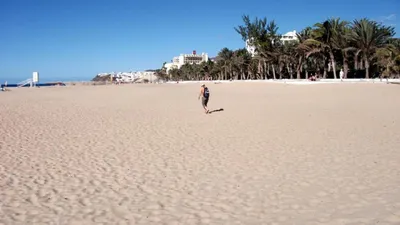
The house sits a short distance inland from the beach, reached on a rough side track or on foot. It is private property. There is no ticket office, no fixed opening hours and no museum, whatever a listings site tells you. In recent years a caretaker living on site has let visitors into parts of the house in exchange for a donation, but reports of what that costs and how it goes vary a great deal, and some visitors describe the encounter as uncomfortable. Go with the assumption that you will see the outside, treat anything more as a bonus, carry small cash if you want to try, and do not argue with whoever is there. While you are on the peninsula, Playa de Cofete is spectacular and genuinely dangerous to swim — strong currents, heavy shore break, no lifeguards. Walk it, photograph it, stay out of the water.

Gustav Winter and the stories that will not die

Gustav Winter was born in the Black Forest in 1893 and worked in Spain from around 1915, running engineering projects across Fuerteventura and Gran Canaria, including an airstrip. He acquired control of much of the Jandía peninsula and began building here. The dates are disputed and always have been: work is said to have started in the late 1930s or early 1940s and halted in 1942 for want of materials, the architect's and surveyor's paperwork was lodged with Pájara town hall in 1949, local accounts put construction between 1946 and 1954, and Winter himself insisted for the rest of his life that he built it in 1958. The house was never finished to the original plan.

That combination — a German engineer, a wartime gap in the building record, total isolation and a tower with a view over the whole southern Atlantic approach — was all the raw material the legends needed. You will hear that submarines refuelled below the cliffs, that tunnels ran from the basement to the sea, that fugitives were sheltered or given new faces here. None of it is proven. No documentary or archaeological evidence has ever been produced for any of it, and an archive project run around the house has published construction correspondence, contracts and photographs from 1946 to 1955 that argue directly against the wartime version. Enjoy the stories for what they are — folklore that grew in an empty landscape — and do not repeat them as history.

Where is Villa Winter?

Frequently asked questions