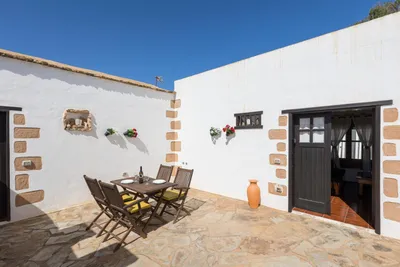
Restored traditional stone farmhouses with mountains behind at Ecomuseo La Alcogida, Tefía

Photo: Frank Vincentz (CC BY-SA 3.0), via Wikimedia Commons

Tefía, Fuerteventura

Ecomuseo La Alcogida

Seven restored farmhouses and the craftspeople still working in them.

Ecomuseo La Alcogida is an open-air museum in the hamlet of Tefía, in Fuerteventura's dry interior, built around seven original Majorero farmhouses restored to how they stood a century ago. They range from a labourer's single-room cottage to a two-storey house with a wooden staircase and tiled roof, each still carrying the name of the family that lived in it. Artisans work in several of them — palm weaving, calado embroidery, pottery — and you can watch, ask questions and buy what they make.

A whole hamlet, not a single house

La Alcogida was a real settlement, and the museum is that settlement — seven houses of a genuine hamlet at Tefía, restored rather than reconstructed, each still known by the family that lived there. The point of showing seven is social range: at one end a single-room labourer's dwelling with a beaten-earth floor, at the other a two-storey house with a wooden balcony, a staircase and a tiled roof, which on Fuerteventura signalled real money. Walking between them in twenty minutes tells you more about the island's rural class structure than any panel could.

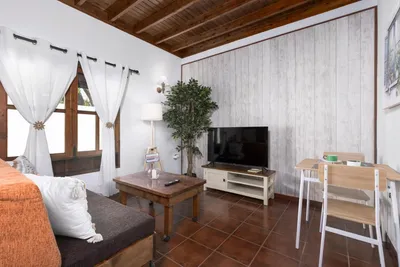
The interiors are furnished rather than empty. You see the low beds, the grain stores, the kitchen and its cooking hearth, and the tools a family needed to farm a landscape that barely rains. Dry stone walls, cisterns and animal pens fill the ground between the buildings, and you walk the site at your own pace rather than in a group. It is the most honest picture of pre-tourism Fuerteventura anywhere on the island.

The craftspeople and the practicalities

Several houses have been given over to working artisans, and this is what lifts La Alcogida above a static heritage site. Depending on the day you might find someone weaving palm leaves into baskets and hats, throwing pots, or doing calado, the openwork embroidery the Canaries are known for. They work in front of you, they are happy to be asked what they are doing, and what they make is sold on the spot — the best souvenirs on the island by a distance. Not every workshop is staffed every day, so treat whoever is there as the bonus.

The museum generally opens Tuesday to Saturday during the day and closes on Sundays and Mondays, with entry of around five euros for non-residents, less for Canarian residents and free for children — confirm current hours before travelling. Allow around ninety minutes, longer if the workshops are busy and you get talking. There is very little shade between the buildings, so come in the morning in summer and bring water. Paths are gravel and mostly flat, though the older interiors have steps and low doorways.

Where is Ecomuseo La Alcogida?

Frequently asked questions

See vacation rentals near Ecomuseo La Alcogida

Holiday homes and apartments within a short drive of Ecomuseo La Alcogida, closest first.