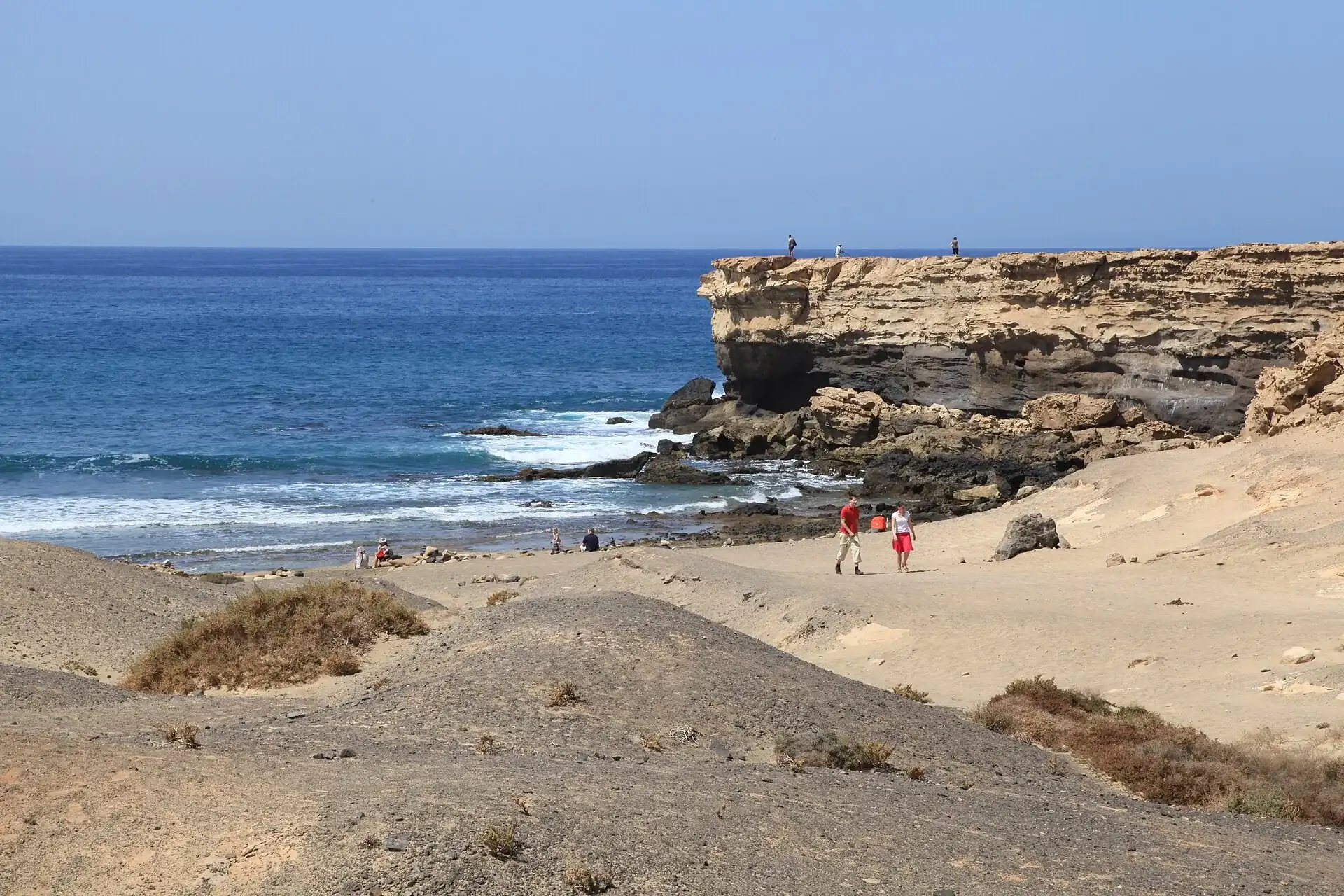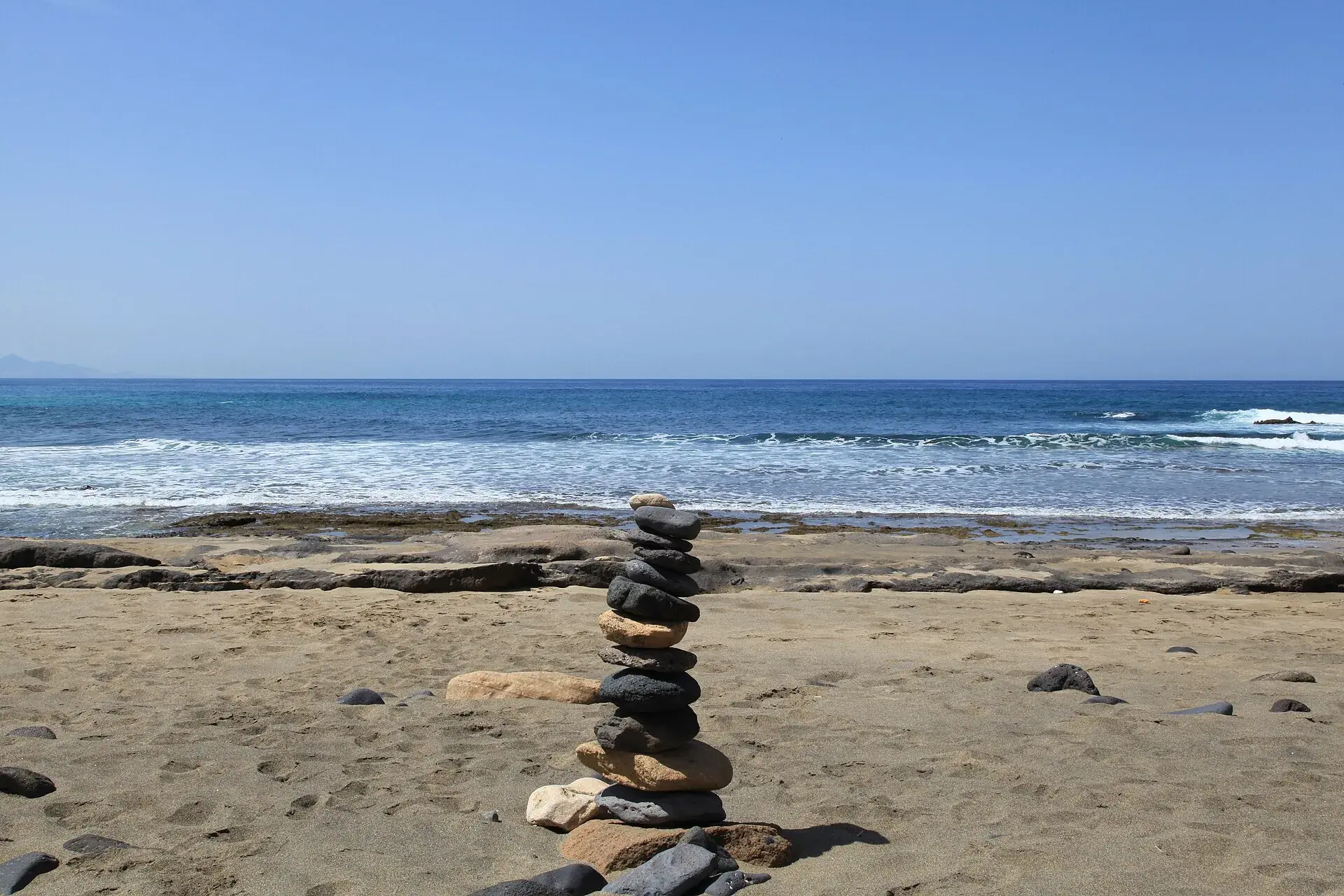
Sweeping dark golden sand beach at Playa de la Pared, Fuerteventura, with low cliffs and Atlantic surf breaking offshore

Photo: Frank Vincentz (CC BY-SA 3.0), via Wikimedia Commons

La Pared, Fuerteventura

Playa de la Pared

Fuerteventura's legendary surf beach, but strictly for surfing, not swimming.

Playa de la Pared lies at the narrowest point of Fuerteventura, where the Jandía peninsula meets the main island, overlooked by the surf village that shares its name. Its sweeping expanse of dark golden sand and low cliffs face the open Atlantic, drawing in consistent swell almost year-round. For decades, it has stood as the island's premier surf destination. However, it is emphatically not a swimming beach: powerful currents make bathing here genuinely dangerous.

Two beaches, one wall, one name

Golden-dark sand beach at Playa de la Pared, Fuerteventura, with low cliffs and Atlantic surf breaking offshore
Fuerteventura's legendary surf beach — not a beach for swimming · Photo: Frank Vincentz (CC BY-SA 3.0), Wikimedia Commons

Mention this beach to five different people, and you might get two different answers. Playa de la Pared refers to the shorter, 250-metre cove directly below La Pared village, accessible via a brief unpaved path from the car park near the Bahía La Pared restaurant. Playa del Viejo Rey, a distinct and longer stretch of sand (around 800 metres further south), is reached by its own cliffside staircase, feeling more exposed and considerably quieter. Most surf schools, forecast sites, and even some official guides use these names interchangeably for 'the famous surf beach at La Pared.' Consider this local shorthand rather than a confusing discrepancy.

Both names derive from a tangible historical feature: a stone wall that once spanned this narrow isthmus. Early 15th-century conquest chronicles record it as the boundary between Fuerteventura's two pre-conquest kingdoms, Maxorata in the north and Jandía in the south. Sections, believed to be over a thousand years old, still stand near Matas Blancas. While some archaeologists contend the true kingdom boundary lay further north, closer to the modern airport, and that this wall marked a narrower divide, its existence and ancient origins remain undisputed.

A beach that almost never goes flat

Every surf school on the island will confirm it: this stretch of coast rarely goes flat. Its exposed, west-facing beach break consistently picks up north-west and north Atlantic groundswell for much of the year, working across all tides. Low tide offers wide, forgiving whitewater, ideal for beginners taking their first lessons with local schools, while a rising tide sculpts faster, steeper green waves further out for more experienced surfers. Winter and spring deliver the most consistent, clean swell. Summers, typical of the island's west coast, tend to be quieter for surfing, but this is precisely when the kite and windsurf enthusiasts arrive to harness the trade winds.

Mornings generally offer the best conditions for paddling out; the onshore wind that shapes this coast typically strengthens throughout the day, often blowing out the surf by early afternoon. The seabed is predominantly sand, interspersed with patches of rock and stone. Waves that appear modest from the clifftop car park reveal their true power once you're in the water. On bigger swells, a strong rip current pulls out to sea at the beach's southern end. This is a significant hazard, not a minor detail, and another compelling reason to book a lesson with a local school rather than attempting to navigate it alone on your first visit.

Not a swimming beach — and how to visit safely

Let's be clear: Playa de la Pared is not a swimming beach. Spanish beach guides, surf-safety advisories, and lifeguard warnings concerning Fuerteventura's west coast consistently highlight the same dangers here: powerful currents, an undertow capable of catching even confident swimmers, and no lifeguard presence. Consider it a beach for guided surfing, peaceful walks, and watching the sunset – but never for children to splash in the shallows. For safe family swimming, head instead to the sheltered south coast around Costa Calma or Sotavento.

Access to the beach is straightforward. Free parking is available in the small, unpaved car park next to the Bahía La Pared restaurant at the village edge. From there, it's a five to ten-minute walk: either a short dirt path down to Playa de la Pared, or a set of wooden and stone steps carved into the cliff face leading to Playa del Viejo Rey further south. There are no facilities on the sand itself, so remember to bring water and sun protection. The village above offers a couple of small cafés and one restaurant. La Pared is located approximately 5km (under ten minutes' drive) from Costa Calma, and about an hour from Puerto del Rosario and the airport via the FV-2 and FV-605.

Where is Playa de la Pared?

Frequently asked questions

See vacation rentals near Playa de la Pared

Holiday homes and apartments within a short drive of Playa de la Pared, closest first.