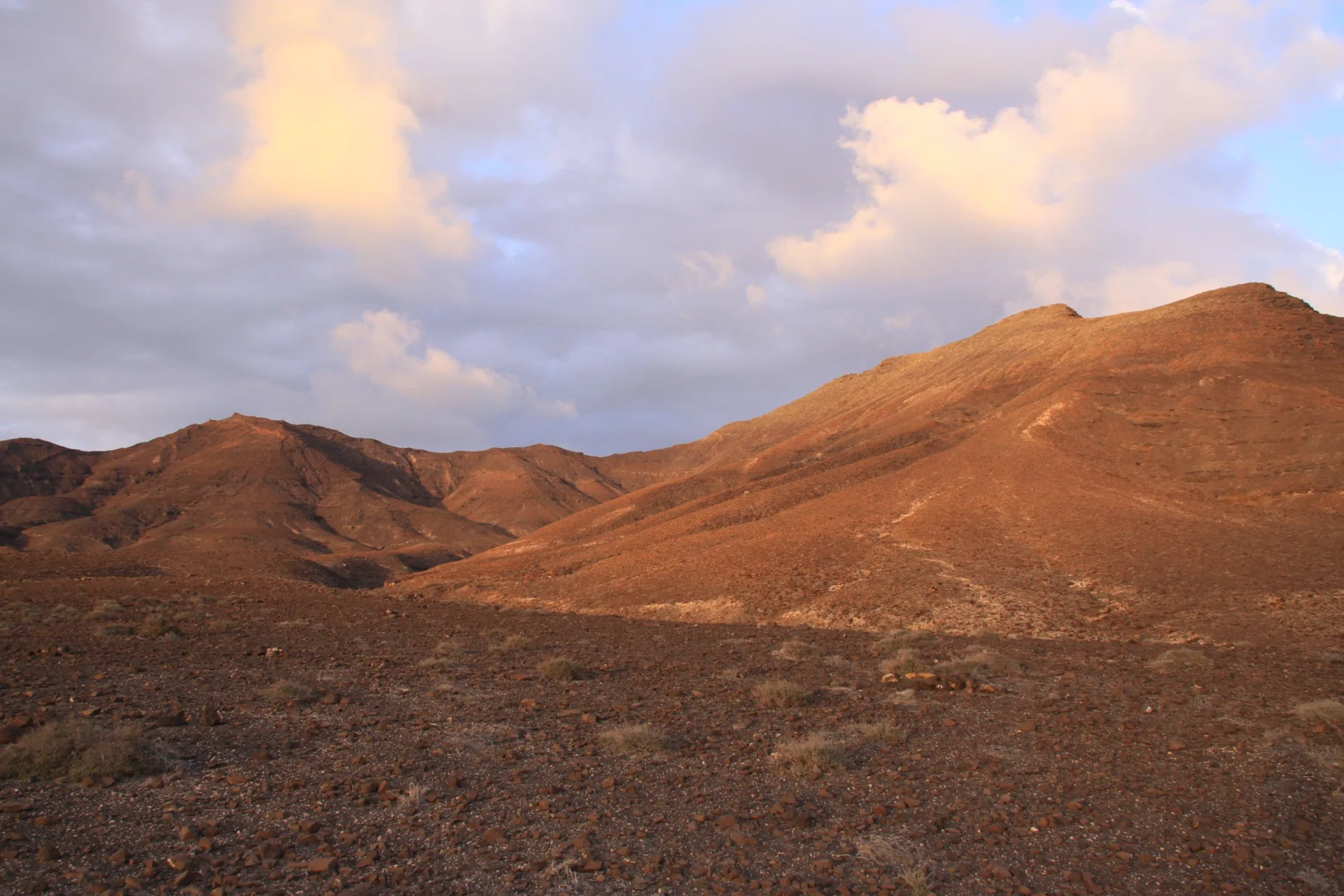
Dramatic ridge of the Jandía mountains rising above the wild Atlantic coast of southern Fuerteventura
Jandía, Fuerteventura

Jandía

A protected natural park with wild beaches and dramatic scenery

The Jandía peninsula is a UNESCO Biosphere Reserve covering the entire southern tip of the island. It is home to Fuerteventura's most dramatic landscapes — stark mountain ridges, endless empty beaches, and almost no development beyond a few small resorts. The remote Playa de Cofete, accessible only by dirt track, is considered one of the most spectacular beaches in the Canaries.

The wild end of the island

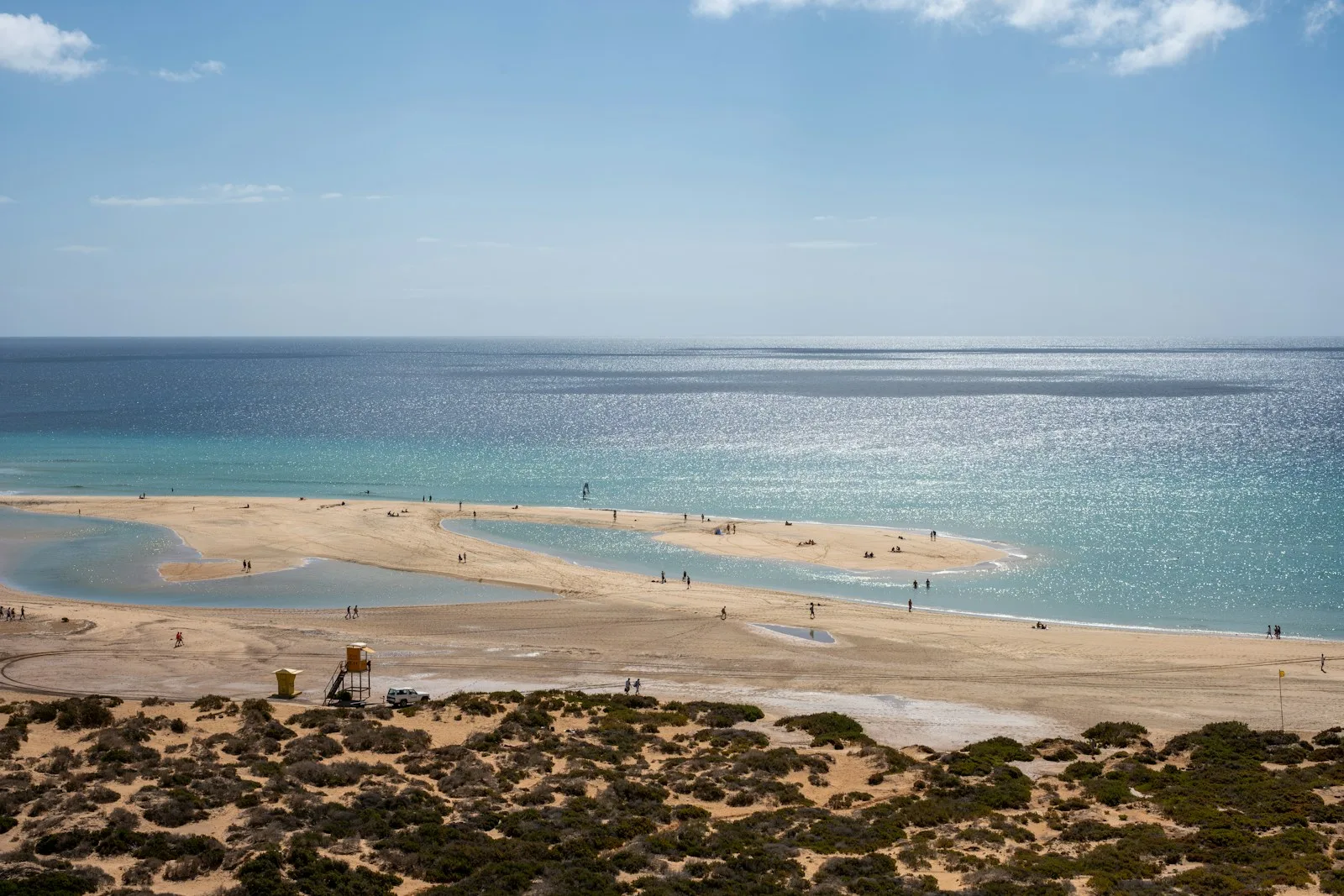
Long ridge of the Jandía peninsula with the Atlantic and Sotavento sandbar visible below
The Jandía ridge runs the length of the peninsula

Jandía is the long peninsula that forms the southern third of Fuerteventura. Most of it is a protected natural park — about 14,000 hectares of mountains, ravines and empty coast that look very different from the resort strips further north. A single ridge of jagged peaks runs down its spine, rising to nearly 800 metres at Pico de la Zarza, with the trade winds streaming over the top and forming dramatic cloud caps on most afternoons.

There's almost no development in the heart of the peninsula. The road south of Morro Jable turns to dirt at Puertito de la Cruz, and from there it's just gravel tracks, lonely lighthouses and the occasional fisherman's shack. The Atlantic-facing west coast has Cofete — eleven kilometres of wild beach with a single, mysterious house up the hillside. The east coast has Sotavento — a shallow lagoon that hosts the windsurfing World Cup.

Most visitors base themselves in the established southern resorts (Morro Jable, Costa Calma, Jandía Playa) and use them as launching pads into the wild. That's the right approach. You don't want to actually sleep in the natural park — you want to drive out, spend the day there, and come back to a cold drink and a comfortable bed.

Cofete, Sotavento and the best beaches

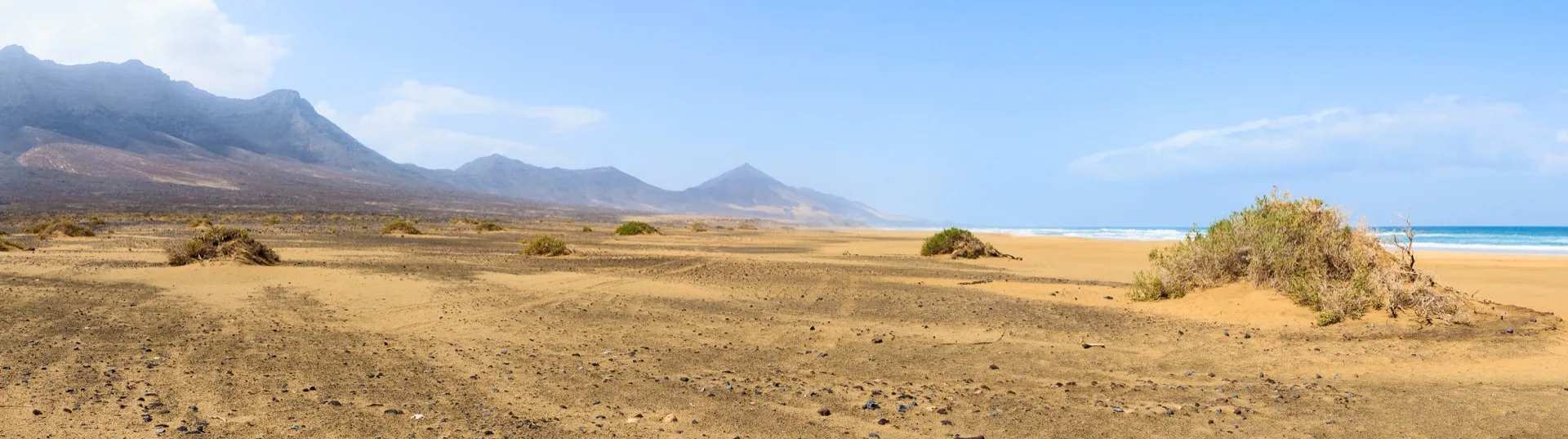
Wide empty wild beach of Cofete on Fuerteventura's Atlantic coast with mountains behind

Cofete is the headline beach. Eleven kilometres of pale, wild sand on the Atlantic side, with the Jandía mountains rising sharply behind. There are no facilities, no umbrellas, no rescue service. The currents are strong and the sea regularly dangerous. Don't try to swim unless conditions are obviously calm and you're a strong swimmer. Do walk for hours, take photographs, and feel small. Reach it by 4WD on a dirt track from Morro Jable (around 45 minutes), by walking (allow two and a half hours each way over the ridge) or on a seasonal shuttle bus.

Sotavento, on the sheltered east coast, is the opposite — a vast shallow turquoise lagoon trapped behind a sandbar. The PWA Windsurfing World Cup runs here every July and August. On non-event days you can walk the lagoon, paddle in knee-deep water, or take a kite or windsurf lesson with one of the schools at Risco del Paso.

In between are smaller, quieter beaches: Playa de Juan Gómez, Playa de las Pilas, Playa del Mal Nombre. These are accessed by dirt tracks off the FV-2 and are usually empty even in high season.

Hiking, Villa Winter and what to do

The headline hike is up Pico de la Zarza, the highest point on Fuerteventura. The path starts from Morro Jable, climbs steadily through volcanic terrain, and finishes on a ridge looking straight down on Cofete. Allow five hours return, take more water than you think you need, and go in winter — summer is brutal up there.

Lower-key walks: the lighthouse road at El Faro de Jandía at the southern tip is an easy flat 4km return; the path from Cofete village to Roque del Moro is a wonderful coastal walk with the chance of seeing turtles and dolphins offshore.

Villa Winter — a remote 1940s mansion above Cofete beach — is the peninsula's mystery story. Built during the Second World War by a German engineer named Gustav Winter under odd circumstances, it has fed conspiracy theories about U-boat refuges, escaping Nazis and gold ever since. It's now a slightly ramshackle museum with informal tours. Worth visiting for the strangeness as much as the history.

And of course, the windsurfing. Sotavento is one of the best teaching locations on earth — steady wind, shallow water, no obstacles. Schools run multi-day courses from beginner to advanced.

Practical: getting around the peninsula

The airport is 80 kilometres north of Morro Jable, 65 from Costa Calma — about an hour by car along the FV-2 motorway. The Tiadhe line 10 bus is the public option.

A car is essentially mandatory for exploring Jandía. Most of the good stuff is off the motorway. A standard hire car will reach Sotavento, Costa Calma and Morro Jable without issue. For Cofete you want a 4WD or at least a sturdy car and slow driving — most rentals officially prohibit the dirt track but in practice many people do it anyway at their own risk.

Months: October to April for hiking and wildlife. May to September for water sports. The peninsula is dry, sunny and breezy all year — pack sunscreen and a windproof.

For where to stay, see the dedicated guides for Morro Jable, Costa Calma and Jandía Playa — the three main resort bases for exploring the peninsula. Each has a different character and different price points.

Where is Jandía?

Frequently asked questions